Using alternate tunings can freshen up your fingerpicking and guitar sound. Drop D Tuning is the perfect place to start.
DROP D TUNING
CHORDS in the key of E
Fingerpicking feels instantly fuller and more resonant in Drop D tuning.
Lowering the 6th string from E down to D unlocks a deeper bass note, wider chord voicings, and patterns that fall comfortably under the fingers. This tuning is especially powerful for solo acoustic playing because it gives you:
A stronger low-end – the low D acts like a built-in drone, perfect for folk and acoustic patterns.
Simpler alternating-bass movements – your thumb can pedal between open D (6th string) and open A (5th string) without stretching.
Richer harmony – many chords gain extra “color” with open-string ringing.
Natural patterns – the hand barely shifts; most motion is in the melody fingers.
Only one string changes – every string says the same except the low E or thickest string.
Use a tuner – if you have a guitar tuner, you can use it or you can use an online tuner.
Ring the D string – the way I get into this tuning is to let the open 4th string (D string) ring out and then tune down the low E string until both sound 'in tune'.
Below are six progressive exercises. Each one features steady thumb control on the bass while the fingers add melody on top.
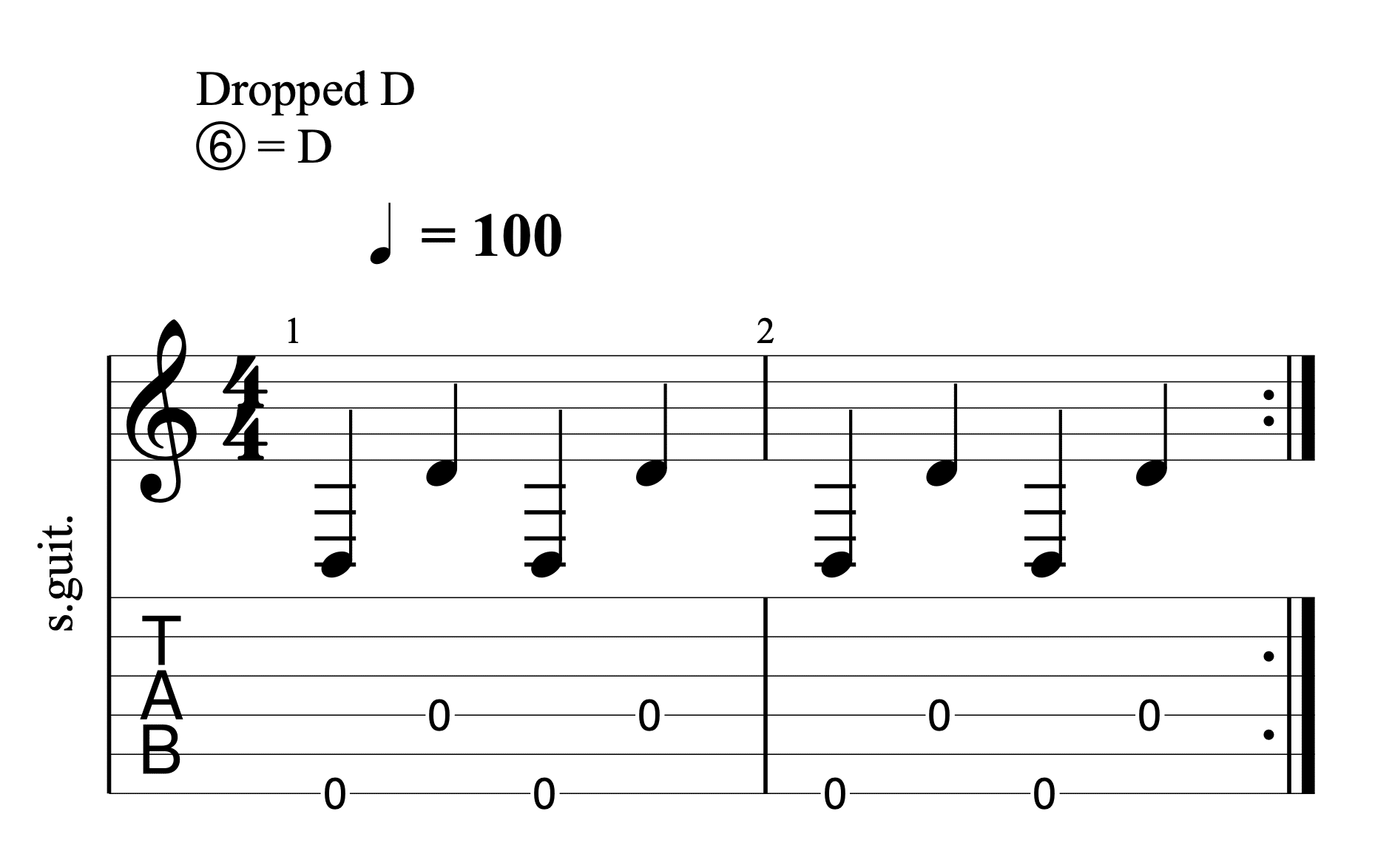
Here we use the thumb to play two different open strings - the first, the second, the first, the second - a technique we know as alternating bass. It's nice though because this is all open strings so you can just focus on the thumb movement of the right hand.
Goal: build a reliable, even alternating-bass foundation. Keep the thumb relaxed and the timing consistent. See if you can play this without looking at your right hand!
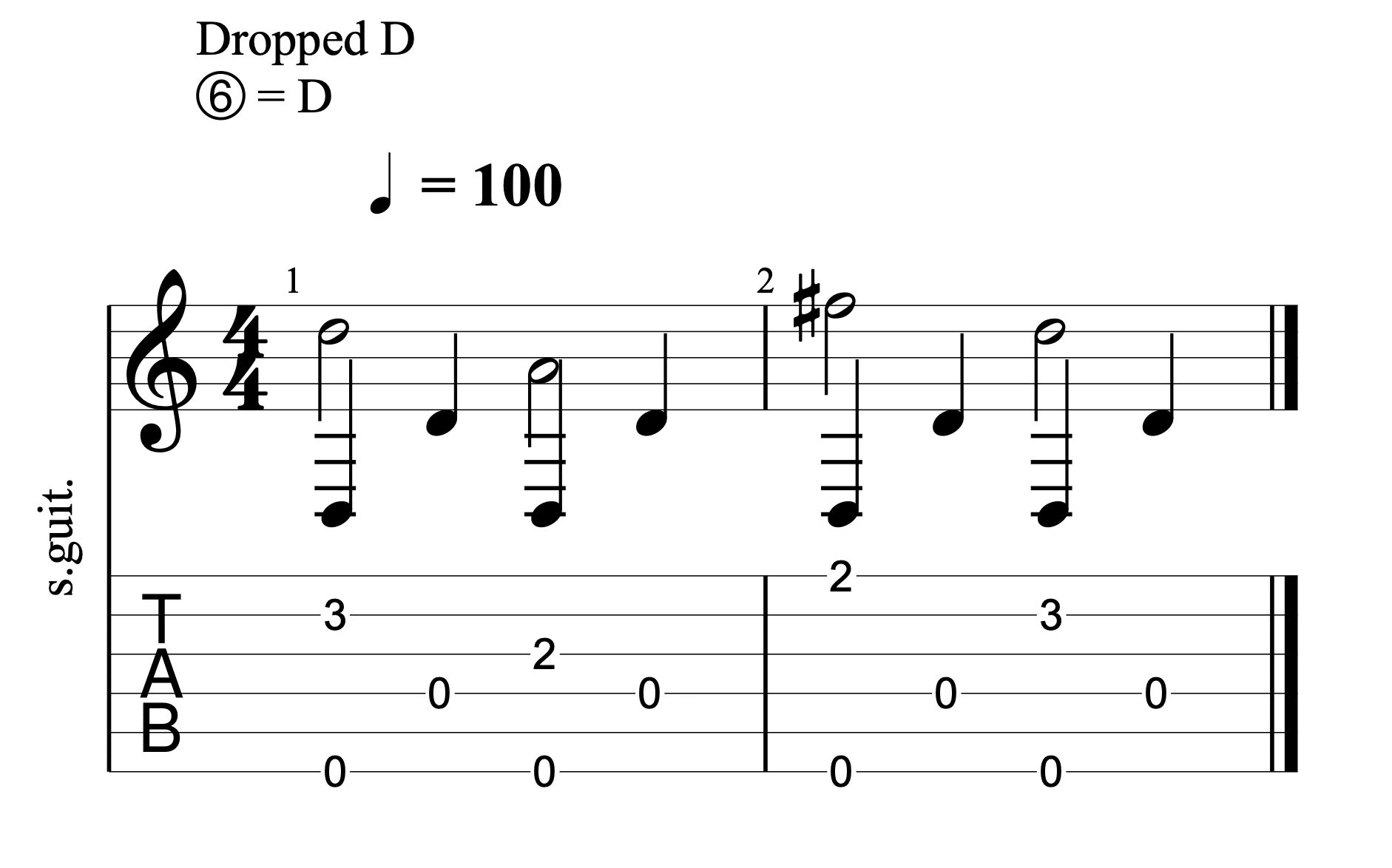
We introduce melody notes on the beat / same time as bass notes. This is the easiest way to add notes to our bass. This is also called a "pinch".
Goal: introduce melody on the high strings while the thumb continues its job. That is the key. Can you play these notes without stopping that regular thumb-played bass rhythm? At first, obviously not but it comes very quickly!
Keep the melody slightly louder than the bass.
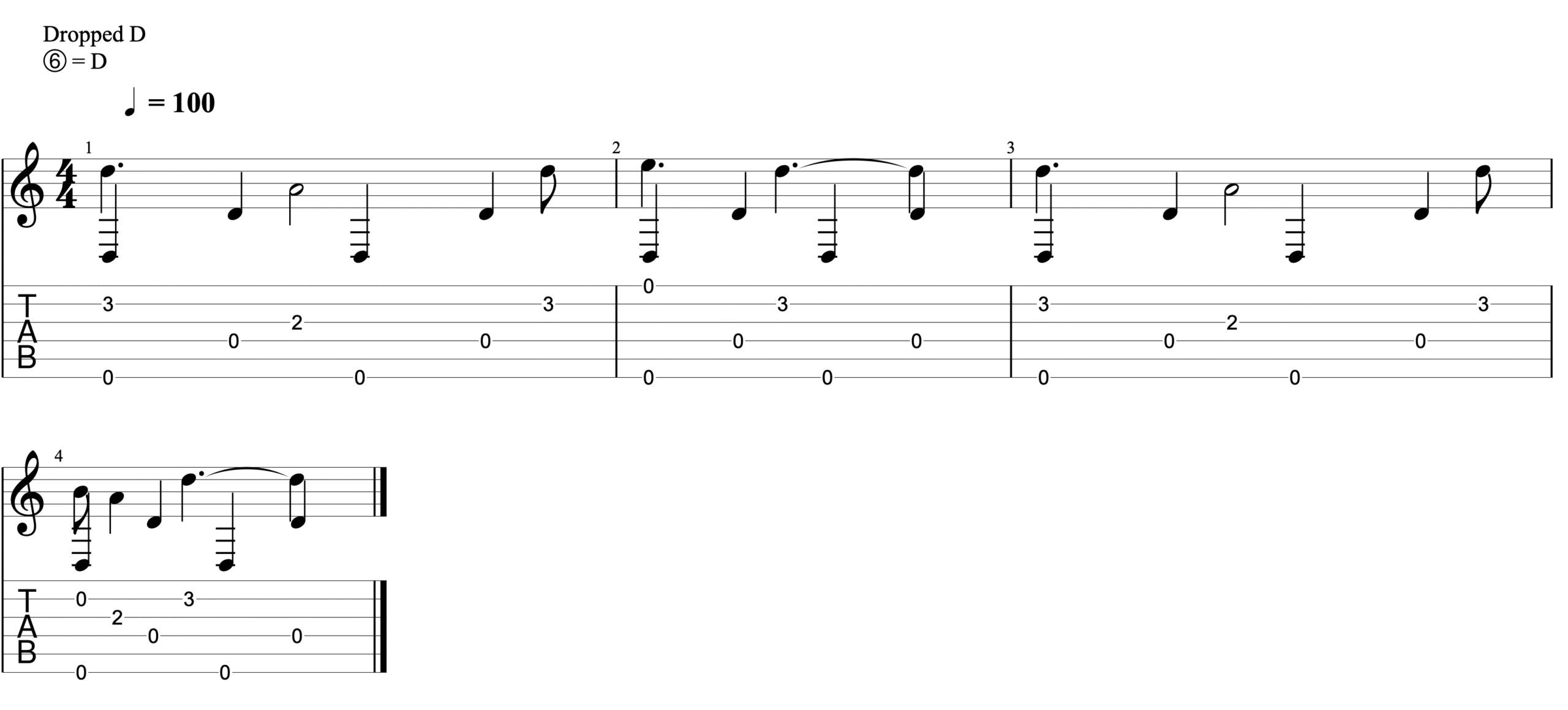
Here we just add more melody notes both on and off the beat.
The first melody note at the very beat (3rd fret of the B string) is a pinch - on the beat.
The next melody note (2nd fret of G string) is between bass notes - this makes the piece more interesting and creates the sense of two lines. Keep steady bass above all else.
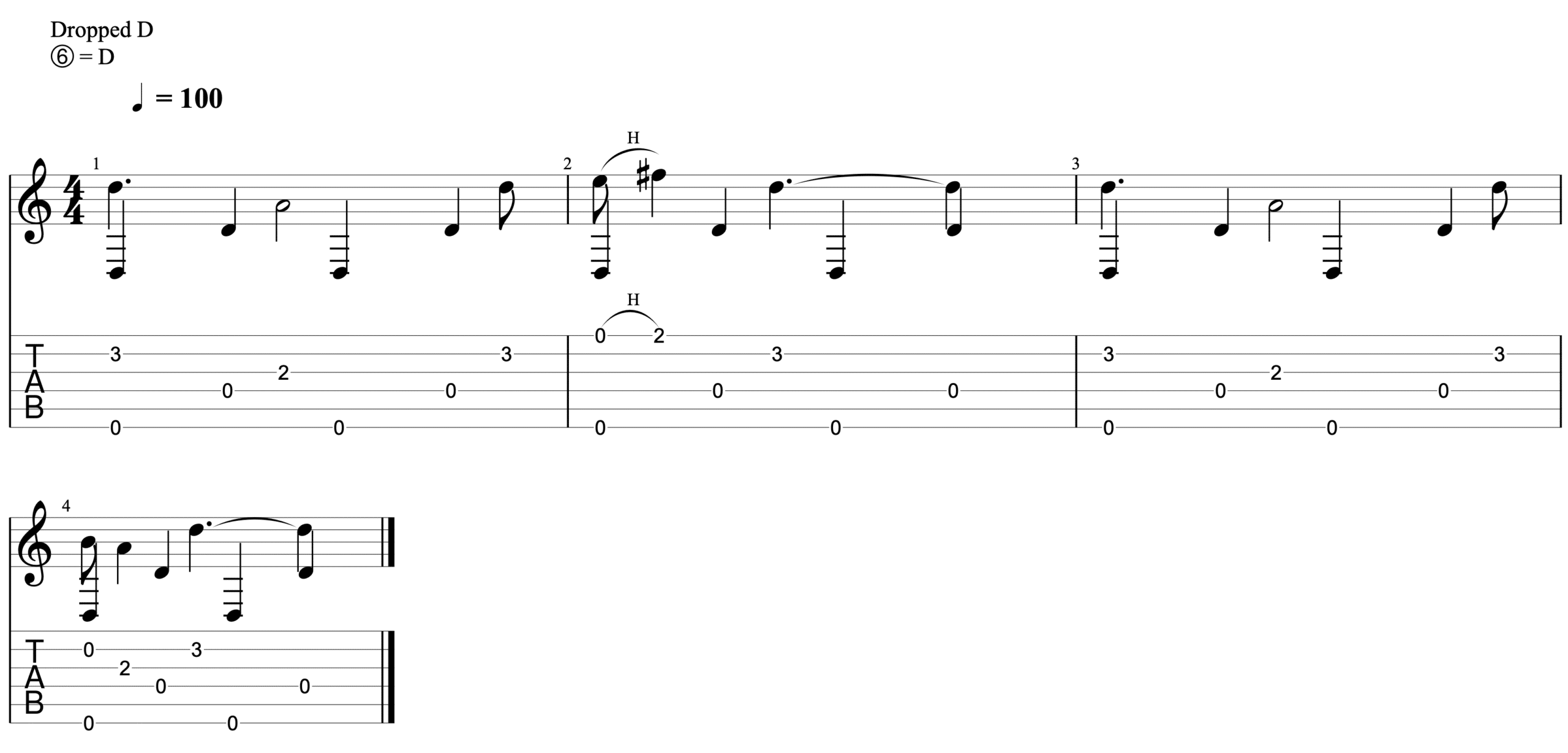
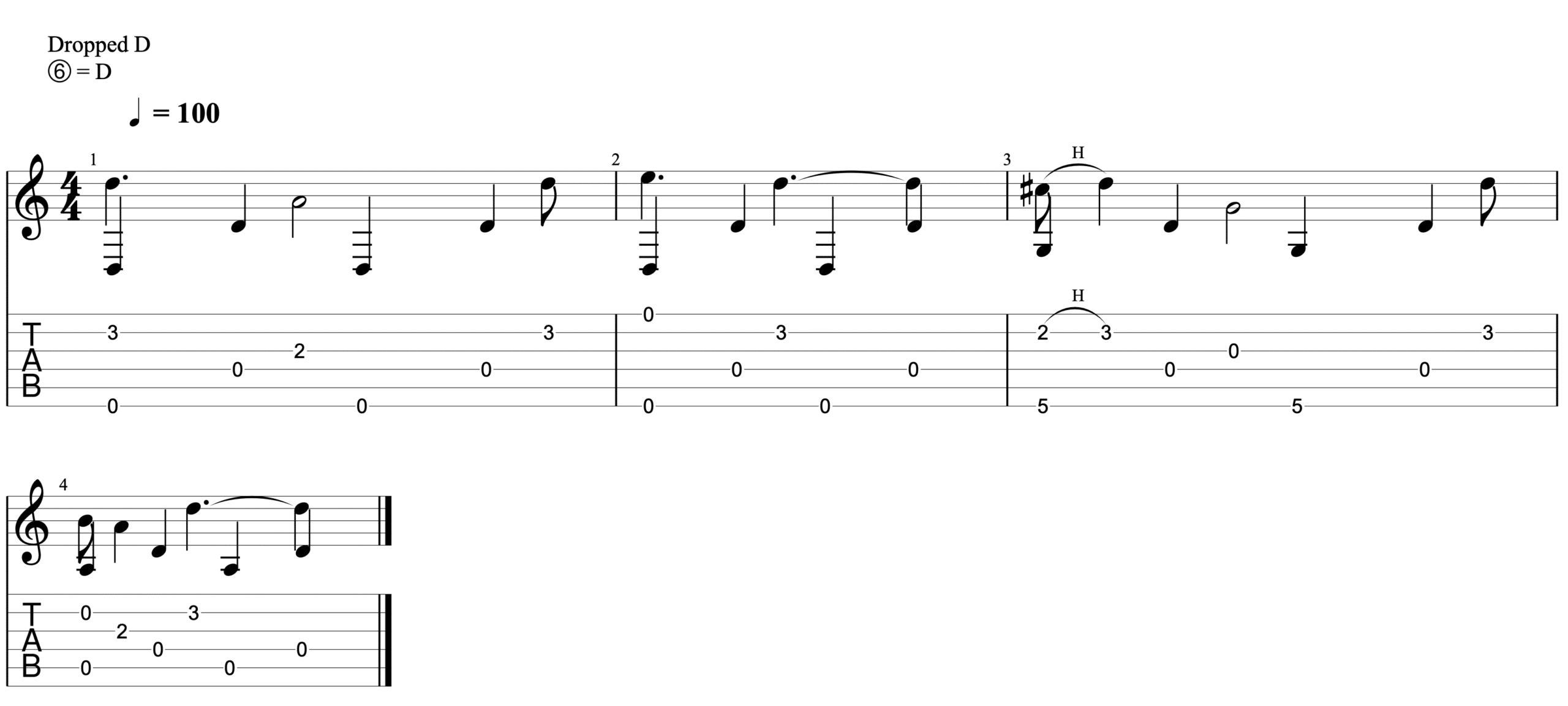
This is a very similar exercise to exercise 3 - but we add a hammer-on at the start of bar 2.
This adds a lot of musicality and is also a bit of a physical challenge if you haven't done it before - as in it's a bit tricky to perform this hammer-on and keep the bass going. Practice makes perfect
Now we play a similar melody but changing the bass. The low E string at the 5th fret is a G chord and the open A string is an A chord.
This is a I-IV-V chord progression and we could play a nice blues in this way, but for now we focus on adding bass movement to our existing melody.
The Drop D tuning is an easy tuning to tune into.
It opens up new sounds on the guitar and offers an easy way to get D bass notes on the lowest string.
It offers unique fingerpicking opportunities and these exercises will get you going.
Please share this article with your followers using the buttons below