How to MASTER THESE FINGERPICKING PATTERNS
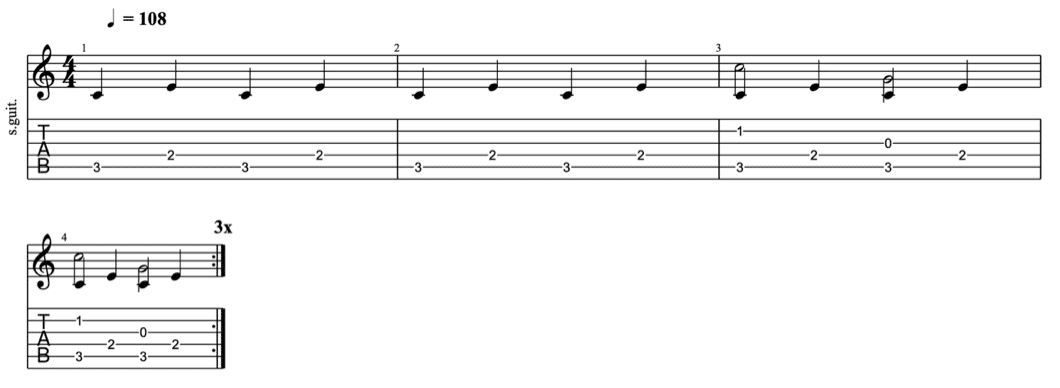
Fingerpicking Pattern 1
- This pattern has a 5-4 bassline
- Thus, your thumb will alternate between the 5th string (A) and 4th string (D).
- Add melody notes on the first and third beats of the bar in bar 3 and 4
- Effectively, you always play a melody note with the C bass note in bars 3 and 4
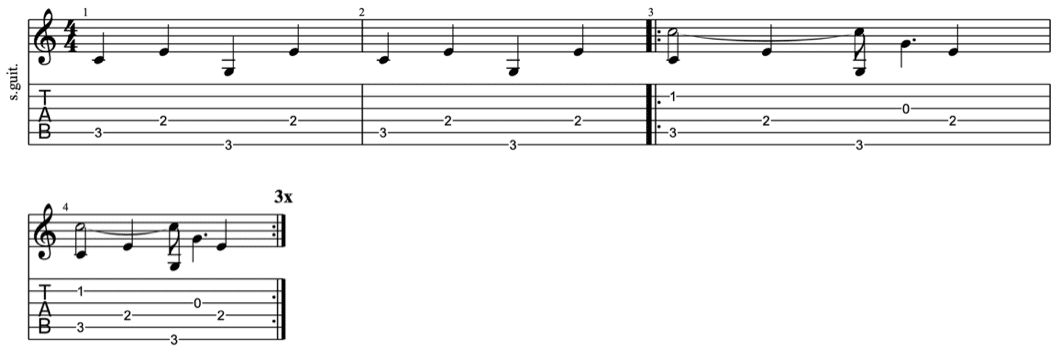
Fingerpicking Pattern 2
- This pattern has a 5-4-6-4 bassline
- Thus, your thumb will play the 5th string (A) and 4th string (D) then 6th string (E) then 4th string again (D).
- The first melody note is on the beat - which is beat 1
- The second melody note is off the beat - between beat 3 and 4
Fingerpicking Pattern 3
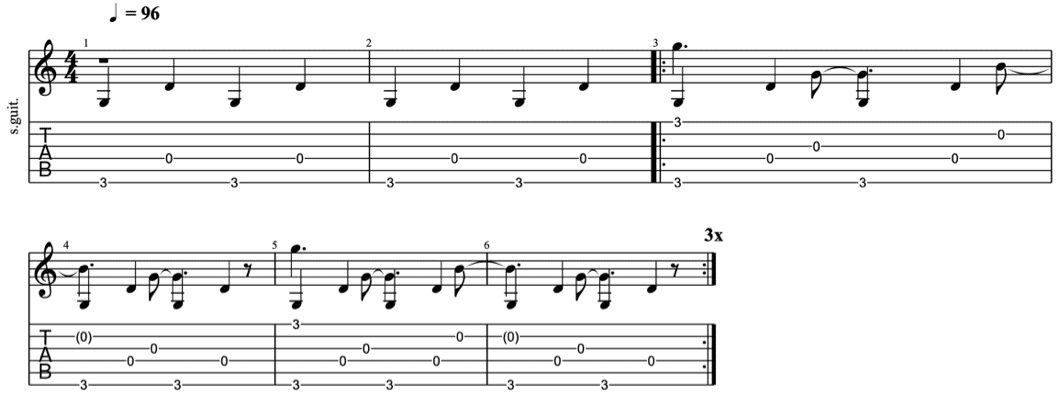
Fingerpicking Pattern 4
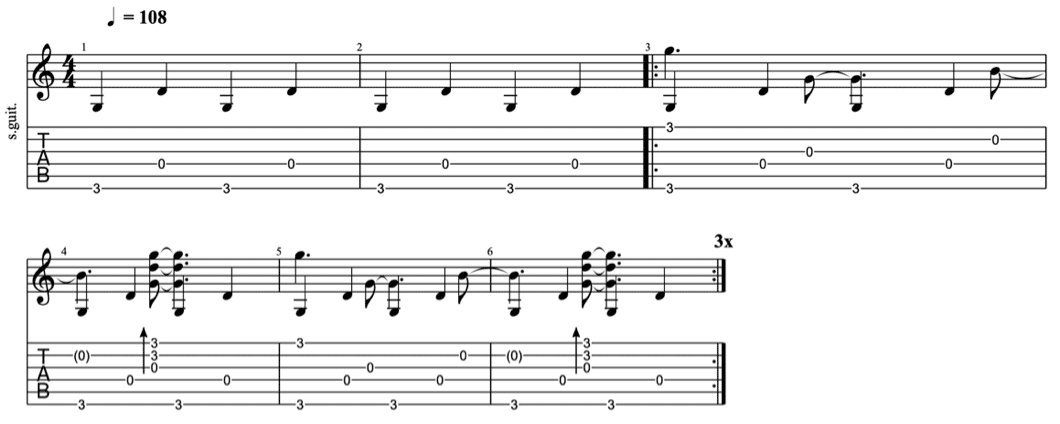
- This pattern has a 6-4 bassline
- Thus, your thumb will alternate between the 6th string (E string) and 4th string (D string).
- In bar 3 & 4, add two melody notes, both are off the beat (in-between bass notes)
Fingerpicking Pattern 5
- This pattern has a 6-4 bassline (as above)
- In bar 3 & 4, add two melody notes, both are off the beat (as the example above)
- Add a couple of chord flicks in bar 5 & 6
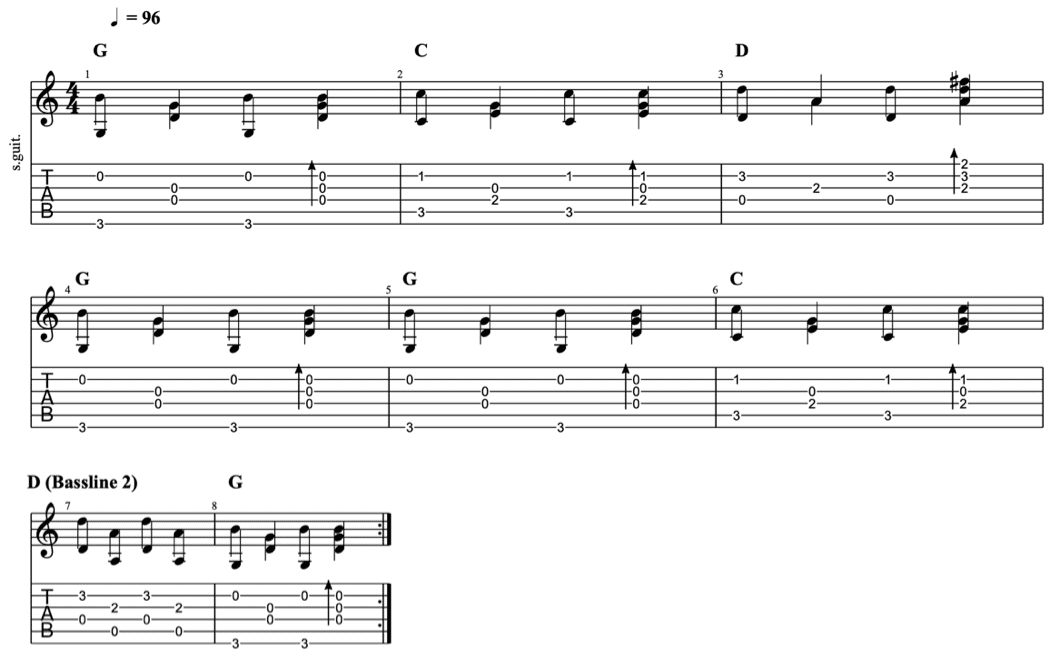
Fingerpicking Pattern 6
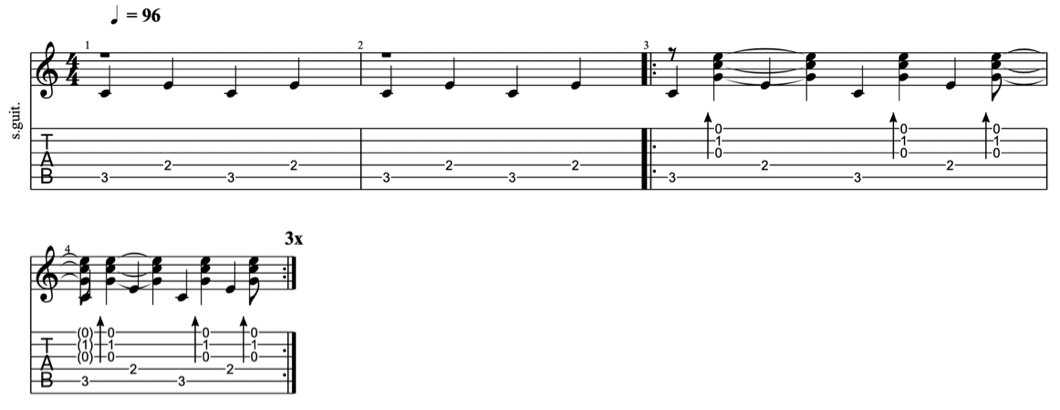
- This pattern has a 5-4 bassline
- Thus, your thumb will alternate between the 5th string (A) and 4th string (D).
- Add a few chord flicks per bar - this will help that flicking motion become truly fluid and automatic
- This fingerpicking pattern is trickier than it looks - take your time with it.
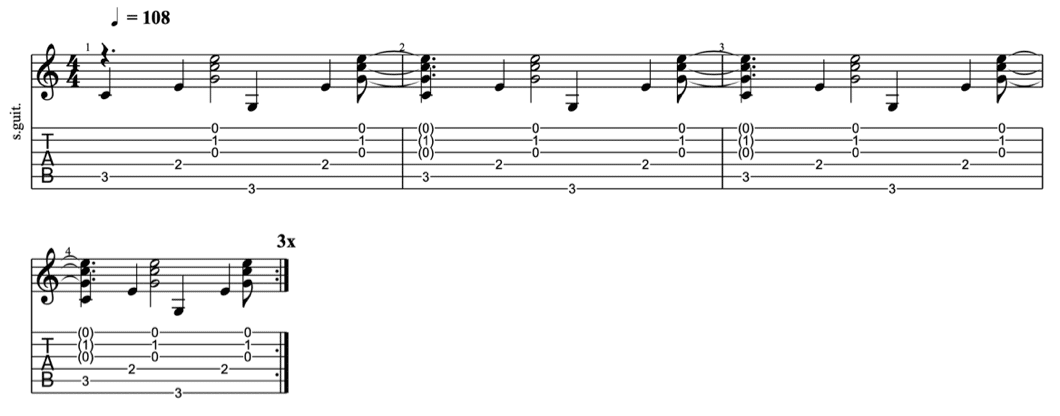
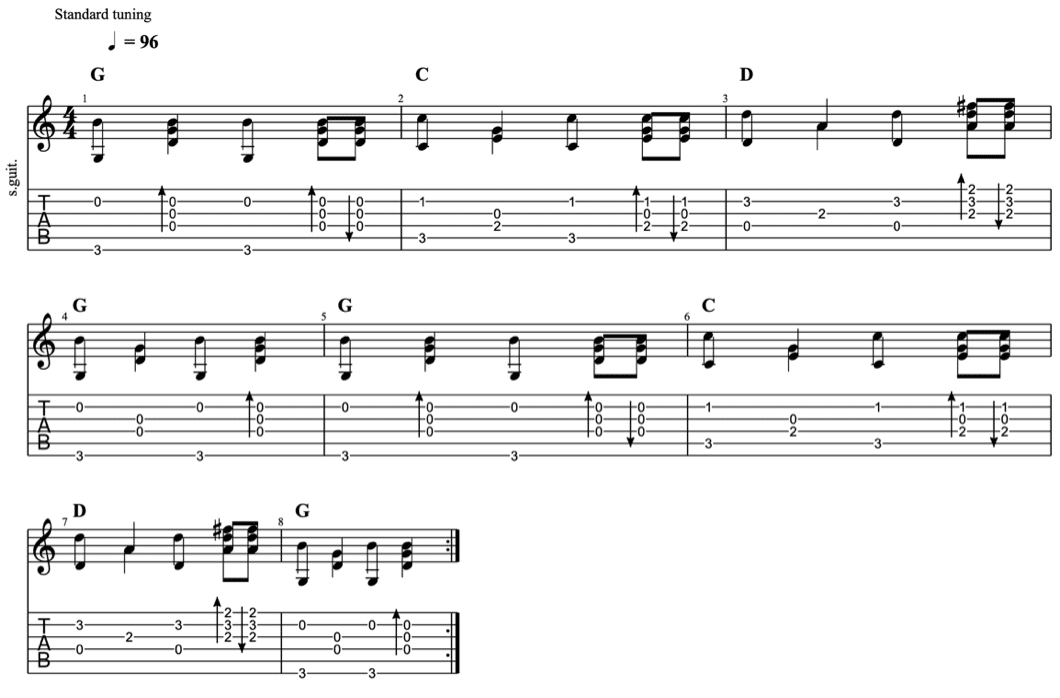
Fingerpicking Pattern 7
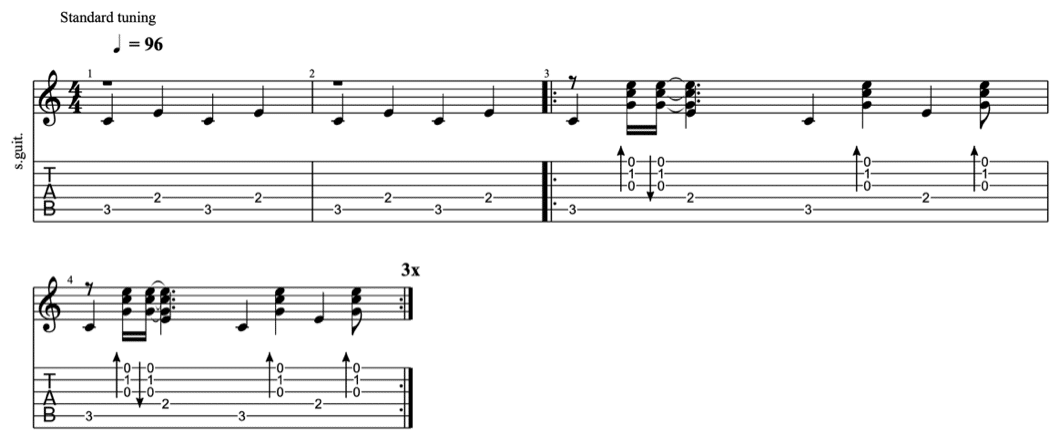
- This pattern has a 5-4 bassline
- Add a few chord flicks per bar
- Note the arrows in the tab - the first chord flick has a down arrow so we use the downward motion of right-hand index finger to achieve this.
- The next chord flick has an up arrow - so we use an upward flick of the same index finger to achieve this
Fingerpicking Pattern 8
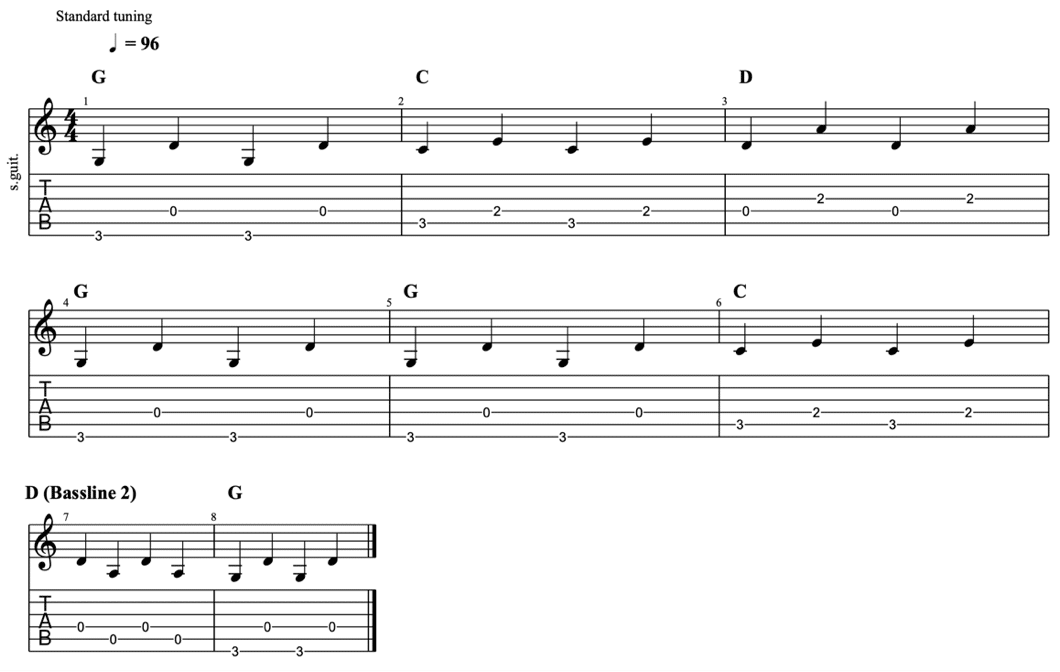
- The chords change from G to C to D to G (which repeats)
- The bassline is different the second time around we get to D
- Focus on getting this right at slow tempo. There's lots of thumb movement here which we want to make "automatic"
Fingerpicking Pattern 9
- Note that some of the chord flicks are at the same time as a bass note.
- When this happens, you don't need to play the bass note with your thumb.
- Rather, let the chord flick/strum ring out the bass note
Fingerpicking Pattern 10
- This is quite the complex piece to start slow
- Take your time and try to play without watching the neck (once you feel like you're starting to master it).
Summary
Get the 50 Fingerpicking Exercises Book & Audio
50 Intermediate Fingerpicking Exercises Book - $19.95